 Global Women TechLeaders
Global Women TechLeaders Mentoring is an international program aiming to foster the development of women in STEM by creating connections between knowledgeable mentors and enthusiastic mentees. Currently, 23 pairs of mentors and mentees joined this 1-year long program, working towards achieving ambitions goals and sharing knowledge. Join us in discovering their career paths and the importance of mentoring in their development.
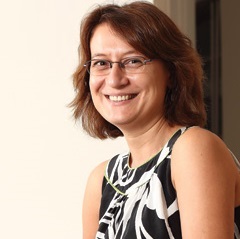
We continue our journey to explore the achievements of the mentors and mentees, as well as their learnings along the way. We present you Valentin Ion, long-time GWTL Strategic Advisor and Director Government Industry EMEA at Microsoft. As Director of Government Industry Solutions, she is responsible for driving customer Digital Transformation, as well as she is in charge of the strategy development for industry solutions sales and for the landing model. As Strategic Advisor for our organization, she has been involved in elevating the programs and supporting the extended team to further develop our activities.
What inspired you to join this community? Why do you believe mentoring is important for women in STEM?
We need women in technology, we need the new perspectives, the collaborative approach, the focus and passion they bring. Women are not only professionals; they are also caring for family and community and as us are one of the most important innovation distributors in daily lives. This is why I’m so keen in supporting such a community, that has a great vision and mission and even more has a great leader and an amazing team that executes with impact.
Mentoring, in my experience, is the best way to share knowledge, on both sides, to listen and unlock potential, to explore alternatives and to motivate going out of comfort zone. It is about trust, self- confidence and support network.
Can you share some insights from this experience so far? What is something you appreciate the most in the experience?
I’ve been impressed by the maturity and courage of my mentees, the will to go out of comfort zone, push themselves, question themselves with regards with their career development, areas of excellence and areas of improvement. It’s also a learning experience as the context in which we each have evolved is different and challenges might vary. I also appreciate the international exposure; we are working in a global workplace more and more.
Have you benefitted from mentoring in your own career? What learnings have you taken with from this experience?
Even now I take this amazing opportunity that mentoring in my career development. So far I’ve learned that mentoring can be formal, that might help you within the organizational network and hierarchy, as well as informal, where you’re naturally driven to a leader, an expert, a person that inspires you professionally or personally. It requires trust and be ready to try new things, hear new perspectives, it requires preparation as well, you get out of it only if you invest in it. It’s a partnership in the end, and it should be approach as such, from the win-win perspective to be sustainable and rewarding. As a mentee I realized I have to also bring something to the game and the question was what can I contribute to this relationship and what I could get out of it. Trust, open minded, inspiration all these make up for a chemistry in the mentoring relationship. We should be brave to reach out and ask for mentoring, accept a decline as well as be mature enough to stop a mentoring relationship that does not progress.
The relationship mentor-mentee is delicate chemistry. What questions do you ask yourself about your mentee before joining a program?
Indeed chemistry is important, it’s the ingredient that makes you look forward for the discussion, motivates you to try new things, enables you to open up and share difficult topics sometimes as you know you will not be judged but the intent is support and development. I always ask myself in which way I can contribute and help. I also ask myself and ask my mentees about their strength and goals as well the willingness to work for it. Expectations setting on both sides is extremely important and honesty is key.
Did you notice recurrent challenges women in STEM address to you as mentor?
I would say self-confidence is a recurring theme, which sometimes prevents or slows down women in their pace of development. Endorsement, approval is something the women seem to seek before making an important step or taking an important action. While it’s always good to get these, sometimes we need to make our own way.
The way we are perceived it’s depending a lot of what we are projecting. And bringing new perspective does not equal contradicting existing. Constructive tension is not conflict, it’s unlocking untapped potential. Once this is understood, I seen women advancing very fast, it becomes a matter of execution, and we are good at this.
For those not yet benefitting from the experience of a mentor, what piece of advice would you share with them?
Try it and you might find it’s a great tool. Be curious and ask questions. You might not know the mentors beforehand but you can think of what are the challenges you would like to overcome, the context you’re facing currently and look for mentors who have a relevant trajectory (companies, roles, regions). Even if you’re not clear on your goals but still have this intuition that it could help you, just ask for an exploratory discussion.